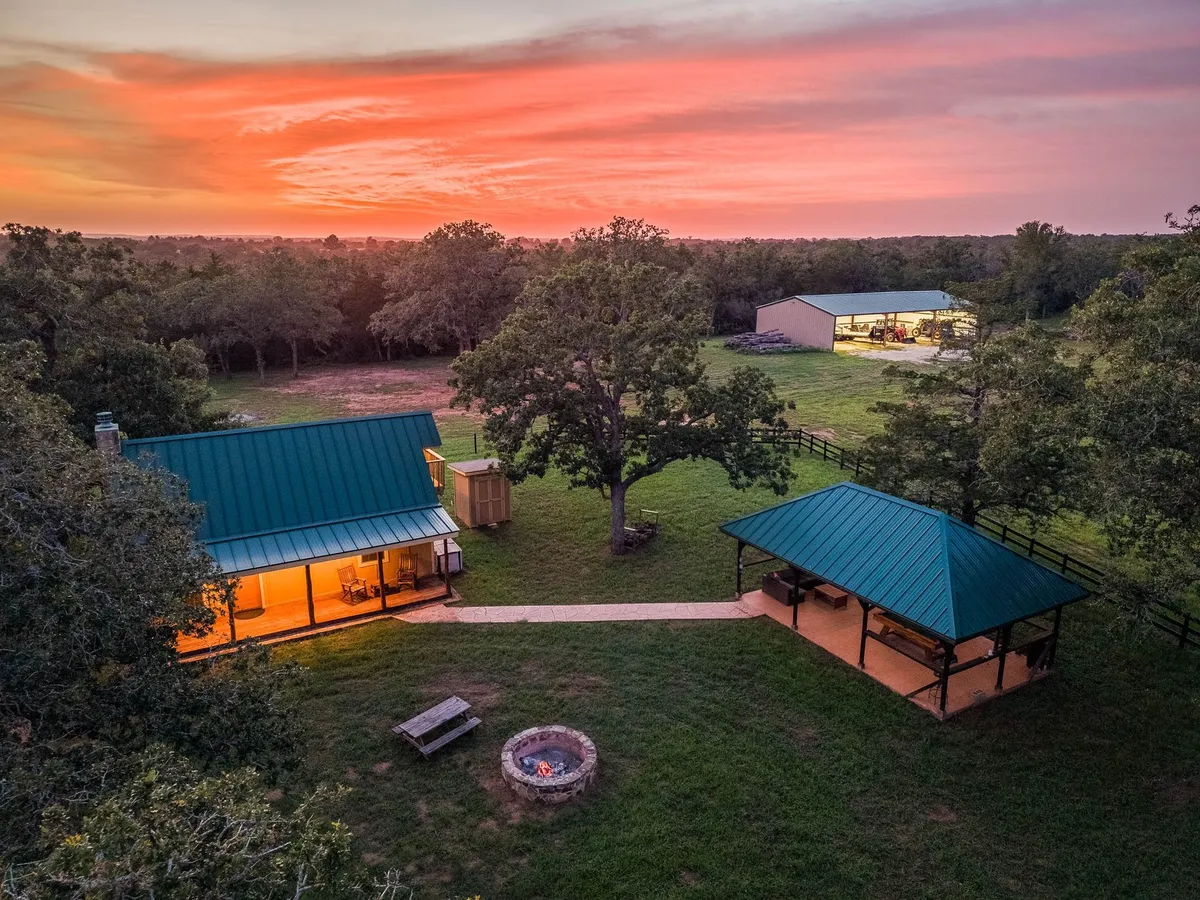
Buying Acreage Around New Braunfels: Ag Exemptions, Deed Restrictions, and What Rural Life Really Costs
By Kyle Ritter | Anders Pierce Realty
Land is my favorite thing to sell. I grew up in Fredericksburg, and there's nothing like a piece of ground with some oaks, a view, and room to breathe. But acreage around New Braunfels comes with a set of rules and costs that never show up in the listing photos. Get them right and you'll love it. Get them wrong and you can owe a rollback tax bill, be unable to build where you planned, or find out the "good well" isn't.
Here's what I walk every land buyer through.
"Ag Exemption" Is Really an Ag Valuation
What people call an ag exemption is technically special appraisal. Under what's called 1-d-1 open-space appraisal, the appraisal district values the land on what it produces (grazing, hay, crops, and so on) instead of market value. The tax savings can be big. A few rules from the Comal Appraisal District:
- History matters. Outside city limits, the land must have been in qualifying ag use 5 of the last 7 years. Inside city limits it's 5 of the last 5.
- A new owner files a new application. The valuation doesn't automatically ride along with the sale. Applications are due by April 30, and approved late filings carry a 10% penalty.
- Wildlife management is an option only if the land qualified for 1-d-1 ag the year before, and you need an approved wildlife management plan.
Each appraisal district sets its own standards for how intense the use must be. Comal publishes an Open Space Guidelines and Standards manual on its website. Read it before you buy. Guadalupe's 2026 standards give you a feel for the detail involved: hay needs at least 5 acres with two cuttings a year; grazing needs at least 4 animal units, at about 1 animal unit per 4 acres of improved pasture, 6 of native, or 8 of brush; beekeeping requires 5 to 20 acres; and wildlife management needs at least 12.5 rural acres. Guadalupe's standards also say horses alone and FFA or 4-H projects alone don't qualify.
What to do: Before you write an offer, look up the property on the appraisal district site and confirm whether it has ag valuation now. Ask the seller who runs the operation (often a lease with a local rancher) and whether that lease can continue. If it ends, so can your valuation.
Rollback Taxes: The Bill Nobody Budgets For
If land under 1-d-1 valuation changes to a non-ag use, the owner owes "rollback" taxes: the difference between what was paid under ag valuation and what would have been owed at market value, for the three tax years before the change.
- HB 1743 (2019) shortened the look-back from five years to three and cut the interest from 7% to 5%.
- HB 3833 (2021) then removed that interest charge. Interest now applies only if the rollback tax goes delinquent.
- For 1-d-1 land, a sale alone doesn't trigger rollback. A change in use does.
Building a house is the classic trigger. Your homesite, yard, and septic area are no longer in ag use, so expect rollback on whatever acreage changes use. The standard Texas contract forms have a paragraph on rollback taxes. Read it with your agent and negotiate it on purpose instead of by accident.
Deed Restrictions Do the Job Zoning Would
Outside city limits, Texas counties generally don't have zoning. Deed restrictions and HOAs are what control land use. Restrictions on rural tracts commonly cover minimum home size, mobile and manufactured homes, livestock, short-term rentals, further subdividing, and setbacks.
What to do: Get the recorded restrictions from the county clerk records (your title company will pull them) and read every page before your option period ends.
Planning to split land later? Comal County generally requires divisions of property to be platted. Updated county subdivision rules took effect June 11, 2026. Among the changes: minimum lot frontage went from 40 to 60 feet, subdivisions on groundwater have to show water availability regardless of lot count, and larger new subdivisions need two access points. Call the County Engineer's Office before you count on splitting anything.
Septic: Your Personal Wastewater Plant
Most rural tracts need an on-site sewage facility. In Comal County the County Engineer's Office permits them. In Guadalupe County it's Guadalupe County Environmental Health, and their order sets a 1-acre minimum lot size for septic (with an exception for some lots created before October 1, 1997).
- The design starts with a soil evaluation by a licensed site evaluator or professional engineer.
- In the Hill Country, aerobic systems with spray irrigation are common. A recent Comal County permit I reviewed required "a continuous maintenance contract." Guadalupe County requires secondary treatment and drip systems to be inspected every four months.
- On the Edwards Aquifer recharge zone, state rules require at least one acre per single-family home for septic, with planning materials from a professional engineer or professional sanitarian.
Water Wells
Most of Comal County falls under the Comal Trinity Groundwater Conservation District, with the Edwards Aquifer Authority overlapping in the eastern part of the county. In Guadalupe County, the Guadalupe County Groundwater Conservation District requires every well to be registered and a notice of intent filed before drilling a new one. On an existing well, ask for the driller's log, the pump age, and a recent water quality test. Depth and yield vary a lot from tract to tract out here.
What Rural Life Really Costs
None of these show up on a listing, and all of them can change your budget:
- Electric line extension. If power isn't at your build site, get a written estimate from the co-op or utility before closing.
- Propane. In my experience most rural tracts don't have natural gas lines. Find out whether the tank is owned or leased.
- Internet. Check the FCC National Broadband Map by address, then call the provider. Don't trust "high-speed available" in a listing.
- Driveway and road. Is the road county-maintained or private? If private, is there a maintenance agreement?
- Septic maintenance contract, fencing, water treatment, and brush clearing. All ongoing, all real.
Here's the Honest Part
The best land deals I've seen weren't the cheapest per acre. They were the ones where the buyer knew the soil would support a septic system, the water was there, the restrictions fit the plan, and the rollback was handled in the contract. That homework costs very little before closing and a lot after.
If you're thinking about buying land and building, come to my free custom home building class. We go through land due diligence step by step. Also see how daily life differs in Canyon Lake, Spring Branch, and Bulverde.
Kyle Ritter | Anders Pierce Realty | 830-998-4412 | [email protected]
This article is for educational purposes only and isn't tax or legal advice. Ag valuation standards and rollback calculations are set by law and by each appraisal district. Talk with the appraisal district, a tax professional, or a real estate attorney about your specific property.
